Are you doing intuitive eating wrong?

Posted on by

He Said

First, a word about what intuitive eating is. In our culture, we are often taught that we cannot trust ourselves to guide our food choices. Instead, we use apps to track our calories and macronutrients, food models and sections of our hands to dictate portion sizes, and various books and online resources that tell us which foods to eat and which ones to avoid.

Eating based on external factors is problematic and often unnecessary. These behaviors instill and reinforce issues of guilt and deprivation regarding our food choices, and they also give the impression that some algorithm knows better than our bodies how we should be eating, which is typically nonsense.

Our bodies are actually quite good at guiding our eating behaviors – young children, for example, are generally great at knowing when, what, and how much to eat (that is, until we screw them up by teaching them to override these cues). We just have to get back to listening to and trusting our bodies again, and that is what intuitive eating is about.

The way I sometimes explain it to patients is to recall Maslow’s hierarchy of needs and discuss that in nutrition we have a similar structure. At the base, someone needs food. Period. If food security is an issue – and such scarcity can be brought on by external issues like finances or access, or they can be self-imposed, such as by dieting – then not much else matters. At the very top is medical nutrition therapy, which is how we eat in order to manage issues with our health, such as high blood pressure.

The middle layer is comprised of our relationship with food: How do we decide what, when, and how much to eat? People oftentimes want to jump right to the top, which is understandable. After all, if someone is concerned about a medical condition, of course they want to dive right in and talk about how they can help the issue through food. The problem, though, is that if we ignore the middle layer, then we do not have a proper context for incorporating the medical nutrition therapy, which can consequently come across as a diet.

Situations do exist in which jumping right to the top is the best course of action. If someone comes in with Celiac disease, for example, discussing matters like safe and unsafe foods, hidden ingredients, and cross-contamination will be high on our to-do list. The difference between this kind of scenario and most others is that with Celiac disease, the issue is more black and white: unsafe foods for this person really do exist and the patient must completely abstain from them. The same could be said for someone who comes in with a life-threatening food allergy.

In contrast, most nutrition-related conditions, including high cholesterol, high blood pressure, and blood sugar concerns, exist in a gray area. We have guidelines, but not rules, so the patient is going to have to make food decisions every single time they eat. Do they really want to be relying on some app, meal plan, or an oversimplified list of “good” and “bad” foods to tell them what to eat for the rest of their lives, or do they want to develop a healthier relationship with food that will enable them to incorporate the medical nutrition therapy in a way that still honors their hunger/fullness cues and cravings? That is why we focus on intuitive eating as a precursor to medical nutrition therapy.

With all that said, the most common way I find that people misuse intuitive eating is the belief that if they eat when they are hungry, stop when they are full, and eat the foods that their bodies seem to be asking for, they will automatically lose weight. This belief is understandable; after all, the idea of energy balance (calories in versus calories out) is so pervasive in our society that people just assume that if they reduce how much they eat, then of course they will lose weight.

In reality, while energy balance is certainly true from a thermodynamic point of view, our bodies are complex open systems, and the math is not as straightforward as our apps would have us believe. If someone consumes a 100-calorie slice of bread, the number of calories he actually absorbs from it will depend on factors such as his genetics and his gut microbiome, whereas someone else could eat that same slice of bread and absorb a different amount of calories. Furthermore, calories consumed affect our calories expended (Think of someone whose metabolism slows as a result of restriction.), so the two sides of energy balance are not as independent as many believe.

Despite my warnings, some patients still believe that if they just learn to eat intuitively, they will lose weight. Thus, they treat intuitive eating as a diet, which is a setup for failure. Time and time again, I have seen such people develop some basic intuitive eating skills early on, but their progress stalls as soon as their weight loss does. Someone might be able to keep one foot in the weight loss and intuitive eating worlds for a short while, but quickly this straddling leads to stumbling.

In order to extensively rediscover our intuitive eating skills, we absolutely must ditch any expectations regarding physical changes, such as weight or body composition, that our bodies will make as a consequence of our pursuits. In other words, if you are using intuitive eating to lose weight, then really you are just dieting, and the results are probably going to be as dismal as they would be with any other weight loss pursuit.


She Said

As many of you know, a lot of the work that Jonah and I do with our clients is around helping them become intuitive eaters. While on the surface the concept of intuitive eating seems quite simple – eat what you are hungry for in the amount that feels comfortable and satiating to your body – there are a number of complicating factors that can get in the way of an individual being able to do this. In some cases, even though an individual might truly want to be an intuitive eater, they might not really be able to do so. The clearest example of this is when I am working with patients struggling with eating disorders (ED).

When an individual engages in eating disorder behaviors, such as restriction, bingeing, purging, or overexercise, oftentimes this will take a toll on their digestive system and their ability to distinguish hunger and fullness cues. As such, I have heard from many patients that they either never feel hungry or never feel full (or in some cases, they cannot even describe what hunger/fullness feels like to them). Since being an intuitive eater depends on the individual being able to not only recognize their hunger and fullness cues but also be able to attend to these cues appropriately, those individuals with ED can find it to be nearly impossible to eat intuitively.

Patients who come to see me and are early on in their recovery process will often bring in with them a meal plan they have been following. In general, I am not usually a fan of meal plans, as I discuss here, but in some cases, they are necessary to help individuals with EDs reestablish their hunger and fullness cues. Making sure that the body is receiving 3 meals and a few snacks throughout the day helps to undo some of the damage that the ED has done to these cues. The body comes to expect that it will be fed at regular intervals; therefore, you will feel hungry at certain times. Feeling hungry periodically is a normal body process, a survival mechanism that tells you when your energy stores are low and your body needs fuel. When a patient with an ED goes long periods of time without eating or not eating enough, the body actually habituates to its hunger signals, and eventually the individual cannot even recognize or feel hunger. Meal plans are an essential step (for some) to get their body back into a natural rhythm of fueling their body when they are hungry.

Sometimes when I have been working for a short while with a patient struggling with ED, they will express the desire to try eating intuitively. While helping my patients become intuitive eaters is the ultimate goal in my work, it is not something I often dive into headfirst with my ED patients. On a number of occasions, I have had individuals try to eat intuitively too soon in their recovery process, and they will find themselves either not eating enough (as they still do not have accurate hunger cues) or eating more than their body is asking for due to a fear of getting hungry.

I like to encourage these patients to try out an approach that is halfway between meal plan and intuitive eating. To achieve this, I will use a “modified” intuitive eating meal plan as a stepping stone to intuitive eating. The plan typically involves having the patient eat every 3-4 hours (during waking hours, of course!) and making sure that they have carbohydrate, protein, fat, and either a fruit or vegetable at each meal. Instead of specifying that the patient needs to have X number of carbohydrate exchanges, I give more of a range (e.g., “have 2-4 carbohydrate exchanges at breakfast”) as this gives the patient some flexibility to eat more if they are hungry for it or eat a bit less if they are not. In a way, it is giving the patient some intrinsic choice around their food while still giving them the structure that their body needs. Once the patient has mastered this “in-between” meal plan for a substantial period of time, we would discuss trying to work on eating more intuitively.

In the end, the goal is to help my patients learn to trust their body’s innate wisdom – that it will tell them when they are hungry, what they are hungry for, and how much is enough to satisfy them. As long as the individual does not jump into intuitive eating too quickly (i.e., before they are ready), they will be well on their way to developing a healthier relationship with food and their body.

“Too Fat” vs. “Too Thin”

Posted on by

Those of us who have had an eating disorder know firsthand that while recovery is possible, the road can sure be difficult. The eating disorder voice is powerful and can make people do and say things they otherwise would not express if their bodies and minds were in healthier places. A woman who is struggling mightily to recover from anorexia nervosa posted on a message board criticism of her treatment team for saying that being “too thin” is problematic while being “too fat” is okay. Does she have a point?

The treatments for someone who is “too thin” versus “too fat” are actually more similar than some people realize. In both cases, the etiology of the person’s size matters as well as whether or not the origin is pathological.

For example, consider two people, each of whom is “too fat.” One person has a healthy relationship with food and physical activity, no significant medical or psychological issues, has always been “too fat,” and comes from a family of people who are of similar builds. Meanwhile, the other person is “too fat” due to binge eating disorder. The former receives no treatment while the latter receives treatment for his eating disorder, not his body size.

Now consider another example of two people who are both “too thin.” One person has a healthy relationship with food and physical activity, no significant medical or psychological issues, has always been “too thin,” and comes from a family of people who are of similar builds. Meanwhile, the other person is “too thin” due to anorexia nervosa. The former receives no treatment while the latter receives treatment for his eating disorder, not his body size.

[Note: Anyone of any size can have an eating disorder, including some “too thin” people who experience binge eating and some “too fat” people who restrict. In reality, we never completely know what struggles someone might have just by looking at them.]

In both cases, whether one is “too fat” or “too thin,” any treatment is targeted at the underlying pathology, if one is present, not at the body size itself. However, for the person who is “too fat” due to binge eating disorder, we let the person’s weight take care of itself as they progress through treatment, as opposed to focusing on the weight. He may or may not lose weight as his disorder subsides, but altering his body weight is not the goal for two reasons:

(1) While being “too fat” is associated with an increased risk of medical woes, causal relationships have not been established, contrary to popular belief. In chapter six of Health at Every Size, Dr. Linda Bacon does an excellent job of explaining the correlations between body weight and the conditions for which weight is often blamed.

(2) While our bodies are relatively adept at gaining weight, they are resistant to long-term weight loss. In other words, interventions aimed at lowering body weight are most likely to result in ultimate weight gain, so in that sense even if the patient’s weight itself is the problem, he is only likely to exacerbate the condition by trying to lose weight.

In contrast, for the person who is “too thin” due to anorexia nervosa, weight restoration is an important part of his recovery. When someone becomes unnaturally thin due to restriction, overexercise, or other disordered behaviors, the body sheds not just fat mass, but also bone structure and tissue from organs, including the brain.

Dr. Ovidio Bermudez, Medical Director and Chief Medical Officer at the Eating Recovery Center, a behavioral hospital for children and adolescents, gave a talk at the 2014 Hynes Recovery Services conference in which he explained, “As a young girl starves herself, or a young man starves himself, and they knock off their sex steroid production, one of the important aspects of that, one of the downstream consequences of that, is that they may also be unintentionally impacting very important aspects of brain development, including neuronal growth.”

When discussing recovery, Dr. Bermudez noted that brain atrophy can be documented just as we can document bone demineralization, and then he continued, “If you stay underweight, your brain size does not recover. So you have to really normalize your weight in order for your brain size to recover.”

Dr. Kim Dennis, former Medical Director at Timberline Knolls Residential Treatment Center and current Medical Director at SunCloud Health, presented at the same conference and explained further, “When a patient with anorexia also says they’re depressed or a parent says they’re depressed, many times that’s not depression. That’s simply what looks like a mood disorder, but it’s based on the fact that their frontal lobes are shrunk, they can’t display affect, they have lower levels of neurotransmitters in their brain, and the cure to that, the treatment to that, is not necessarily Prozac, but it’s food and refeeding.

“Many times patients with anorexia really, really value their brains, and a lot of times you’ll tell someone with anorexia, ‘You’re not thinking straight because you’ve lost neurons. Your brain looks more like a 60-year-old with early dementia than an 18-year-old.’ And they’ll say, ‘I know a lot of anorexia patients might look that way but my brain doesn’t.'”

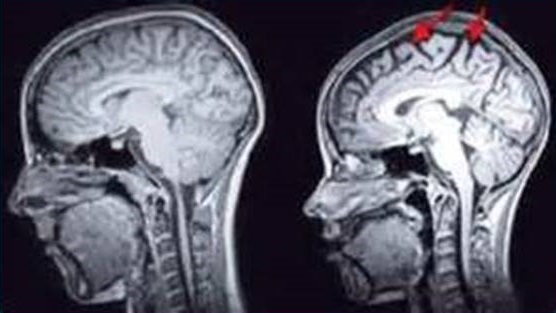
She then referred to a slide showing a brain with reduced volume due to restriction side by side with a healthy brain. “It’s important for us [clinicians] to realize when we’re working with a malnourished, underweight patient that there’s no amount of CBT (cognitive behavioral therapy) or DBT (dialectical behavioral therapy) or trauma work that’s really going to be effective unless that person’s brain is regrown first. So, first and foremost, food is medicine.”

Left: Normal control. Right: Patient with anorexia nervosa. (Image courtesy of Dr. Kim Dennis and SunCloud Health.)

Sometimes patients ask me to differentiate how my role, as a dietitian, differs from the roles played by other practitioners on their treatment team, namely their therapist. Oftentimes, I explain that eating disorders are mental illnesses that get played out through food. My role is to provide nutritional support during the early stages of recovery and then to help someone form a new and healthier relationship with food as the eating disorder recedes, but the bulk of the recovery happens in the therapist’s office.

For the reasons that Dr. Bermudez and Dr. Dennis explained, the brain cannot rebuild without weight restoration, and without an appropriately functioning brain, therapy – and therefore eating disorder recovery – becomes that much more of an uphill battle.

Privilege

Posted on by

We welcome questions, feedback, and constructive criticism from our patients and readers, even if their opinions differ from ours, so long as the comments we receive are respectful. In response to a blog I wrote a few months ago discussing the intersection of nutrition and politics, one reader sent me the following message.

“I believe people’s passions for their careers should be evident. When someone comes through your door, they are seeking you out for your nutrition knowledge. You are brilliant at your job. The appointment is a give and take of information. However, I believe that people’s passions for politics should be kept private unless all parties have mutually agreed to share their views. Our views are slanted by all we know. As a former educator, we used to feel it was our job and it was our responsibility to try to remove our personal view from the workplace.”

Let me go through her points and respond to them one at a time.

“I believe people’s passions for their careers should be evident. When someone comes through your door, they are seeking you out for your nutrition knowledge.”

People seek out dietitians for all sorts of reasons. One person may have high cholesterol and hopes of lowering it via medical nutrition therapy, while someone else might have a history of chronic dieting and envisions building a healthier and more peaceful relationship with food. Some patients stop there, limiting their search for a dietitian to such criteria as perceived knowledge regarding a specific concern, as well as logistical factors, such as geographic location, ease of transportation to and from the office, insurance coverage, and appointment availability.

However, other patients have concerns that extend far beyond such basics. They want to know the person with whom they will potentially be working with and therefore desire some self disclosure on the dietitian’s part. Beyond that, many people value and are seeking a safe space for themselves. They want to know if their prospective dietitian will judge them for their size or behaviors, for example, or if the dietitian holds views on gender identity, ethnicity, religion, sexual orientation, skin color, nation of origin, or physical ability that hinder their ability to provide quality patient care. Sure, nutrition knowledge matters, our reader got that right, but she neglected to consider other factors of importance in a counseling relationship.

“You are brilliant at your job. The appointment is a give and take of information. However, I believe that people’s passions for politics should be kept private unless all parties have mutually agreed to share their views.”

The aforementioned individuals who are searching for a safe space for nutrition counseling need to know that we offer one. Furthermore, people sometimes ask us where we stand on societal issues and what actions are we taking to be a positive force in the world. They want to know what we are doing to combat weight stigma, for example, or to defend their health insurance coverage. Last fall, when we announced that we were donating 100% of the co-pays we collected between Thanksgiving and New Year’s to the Southern Poverty Law Center – an organization that fights hate and teaches tolerance – one ex-patient messaged me out of the blue to voice his displeasure while the rest of the feedback we received was positive.

Our practice’s philosophy is reflected in how we do our work – for example, we believe in collaboration and equality with our patients, which is why I like the symbolism of the round table in my office – and said philosophy also includes that we offer individualized nutrition counseling because we know that what works best for one person might not work so well for someone else. With that in mind, time spent in appointments belongs to my patients and I do not force political discussions on anyone, nor do I initiate them. If someone wants to focus on which fruits are highest in soluble fiber or some other superficial topic of hard science, no problem, fine by me, but my very next patient might be questioning what the point of working on their nutrition even is when they fear being murdered in a hate crime, having their health insurance stripped away, losing a loved one to deportation, etc. so I have to be malleable enough to respond to whatever feels most pressing to the person sitting with me at a given point in time.

“Our views are slanted by all we know.”

Exactly. With that in mind, I respectfully suggest that our reader reconsider the rest of her argument. Politics may have no place in nutrition counseling based on her world view and life experiences, but other people feel quite differently based on their own roads traveled.

“As a former educator, we used to feel it was our job and it was our responsibility to try to remove our personal view from the workplace.”

Just because I was a student does not mean I am an expert in education, but in my layman’s view I can envision issues with educators inserting their own political beliefs into their work. However, I question the parallel between that and nutrition counseling.

Teachers grade their students, sometimes write them recommendations, and are typically called by honorifics such as mister. Given a teacher’s position of power over their students, I can imagine that issues might arise if they reveal their own political leanings. Some of our patients, particularly children and adolescents, may expect a similar power dynamic when they first come to our practice, but we quickly dismantle that and emphasize that we are all on the same plane. We preach equality and collaboration, and nobody ever calls me Mr. Soolman twice.

Public education systems are taxpayer-funded institutions and my layman’s understanding is that they are supposed to accommodate the masses. If a teacher’s political discussion negatively affects the experience of a child who has every right to be there, I can imagine how that would be a problem, especially if said child does not want to or has no means to seek an education anywhere else. As a similar example, consider emergency room doctors who refused to issue the morning-after pill because doing so conflicted with their own beliefs. There was no room for such convictions in a hospital that is supposed to serve everyone, especially when time was of the essence and finding another clinic in short order might have been impractical or impossible.

Soolman Nutrition and Wellness, however, is a private practice, not a public institution, and patients have the choice whether to work with us or not. Sticking with the education theme, perhaps the best comparison would be that of a private school. If a Catholic high school wants to make daily prayer a way of life and take students on a field trip to Washington DC to participate in a pro-life march, so be it; those students and their families knew what they were getting themselves into when they choose to enroll there. If a family desires a more secular education, they can pursue enrollment at another private school or utilize the public school system to which they are entitled.

The reality is that while some people get irked by the occasional mention of politics in our blogs or e-newsletters, others feel comforted by those same inclusions. To feign political neutrality or to sidestep the topic entirely is still in itself to proclaim a stance and we would have to face the ramifications of our silence. We appreciate everybody who comes to our practice, but we cannot be everything to everyone; if we must turn off the privileged in order to welcome the vulnerable, we would rather do that than the opposite.

Carbs

Posted on by

One of the quotes most pertinent to my work as a dietitian actually comes from a religion professor, Alan Levinovitz, who has taken to writing about nutrition in recent years because of the intersectionality of spirituality and food. He explains, “It’s terrifying to live in a place where the causes of diseases like Alzheimer’s, autism, or ADHD, or the causes of weight gain, are mysterious. So what we do is come up with certain causes for the things that we fear. If we’re trying to avoid things that we fear, why would we invent a world full of toxins that don’t really exist? Again, it’s about control. After all, if there are things that we’re scared of, then at least we know what to avoid. If there is a sacred diet, and if there are foods that are really taboo, yeah, it’s scary, but it’s also empowering, because we can readily identify culinary good and evil, and then we have a path that we can follow that’s salvific.”

In other words, good/bad food dichotomies offer comfort even if they are based more on theology than science, but why are carbohydrates often demonized? After all, given that the dietary reference intakes call for 45% to 65% of our total energy intake to come from carbohydrates, these macronutrients cannot really be that evil, can they?

First, remember the crosshairs of nutrition scapegoating are fickle and used to point elsewhere, such as fat in the 1980s and gluten more recently. These days, the most common reason I hear why people look down on carbohydrates as opposed to other foods is the perceived association between carbohydrate intake and weight change. Someone cuts his carbs, sees himself quickly drop weight, and therefore believes that carbohydrate elimination or reduction is the key to weight loss. Similarly, the weight regain that occurs with reintroduction of carbohydrates reinforces the notion that carbs are problematic.

Such conclusions, which are understandable if based solely on observation and experience, do not take into account the physiology of what actually happens within the body. We store carbohydrates in the form of glycogen in our liver and muscles so we have fuel for various processes, including physical activity. On a chemical level, water is bound up with the glycogen. Therefore, when someone reduces his carbohydrate intake and quickly drops weight, what he is really losing is water weight, not fat mass, as his glycogen stores decrease. Similarly, when he reintroduces carbohydrates, he rebuilds his glycogen stores and the water that gets packaged with it, and he consequently regains weight.

Furthermore, carbohydrate reduction can trigger a downward spiral. Because our bodies are adept at telling us when we are in need of a nutrient (For example, putting aside extraneous circumstances, we feel thirsty when we are dehydrated, and the action of drinking becomes less pleasurable as we rehydrate.), when we cut our carbs, we in turn feel an increased drive to consume them. If and when we finally eat them again, we are likely to overconsume, partly due to the body making up for the deficit and partly as a natural reaction to restriction. This overconsumption, especially if weight regain accompanies it, reinforces the preconceived notion that carbohydrates are problematic. Sometimes people even go so far as to believe they have an “addiction” to carbohydrates or specifically sugar. Thus, they cut carbs again and the cycle continues. This is a form of paradigm blindness in that some people do not realize that their presumed solution actually exacerbates the problem, so they keep adding more of the supposed solution to the ever-worsening issue.

Even if someone does manage to sustain long-term carbohydrate reduction, such behavior comes with risks. For example, fiber, which is important for cardiovascular health, energy stability, and bowel function regularity, naturally occurs in high-carbohydrate foods, such as legumes, vegetables, and whole grains. Therefore, reducing or eliminating these foods makes achieving adequate fiber intake a challenge. Carbohydrates are the brain’s primary source of energy, so not taking in enough of them risks concentration lapses, mental fogginess, and malaise.

During physical activity, our bodies rely on carbohydrates as the primary fuel source. As an endurance athlete, I have experienced the fallout from inadequate carbohydrate intake firsthand. Only twice in my life have I failed to complete a long-distance bicycle ride that I began: the first was when I fell off my bike and fractured my spine, and the other was a few years later while I was experimenting with a low-carb diet. During the latter ride, I became so fatigued and dizzy that I could not continue and had to have someone drive me home.

If carbohydrate reduction is not the key to good nutrition, what is? Well, the answer is complicated and not easily distilled into a soundbite. Health is both complex and multifaceted, and no two individuals are likely to define it in exactly the same way. Therefore, how we approach it from the perspective of nutrition has to be individualized as well. Speaking generally though, we suggest doing away with good/bad food dichotomies, which are more harmful than helpful, and instead placing all foods on a level playing field of morality. Rather than letting issues of guilt and virtue steer your eating, let your body’s internal cues be your compass. When you do that, you just may find that your carbohydrate intake falls within the aforementioned dietary reference intake range. Lord have mercy.

“Good Shot”

Posted on by

“Learn to say ‘good shot,'” my physical therapist suggested as I prepared to return to competitive tennis last fall. Her advice had nothing to do with sportsmanship. Rather, it was a half-sarcastic quip that reflected her assumption that I would not be able to reach balls that I was capable of tracking down years ago and a note of caution that it might be in the best interests of my back to not even try for them if I had any doubt.

She had a point, but only to an extent. Charging forward towards a drop shot, watching the ball fall for its impending second bounce, inching the butt of the racquet handle further towards my finger tips to take advantage of whatever length I can muster, I often think to myself, “Why aren’t I there yet?” Sometimes I forget I am a 40-year-old with a bunch of titanium in my spine. Then reality hits: The ball – just out of my reach – takes its subsequent plop on the court, my physical therapist’s advice echoes in my mind, and I glance up at my opponent and offer, “Good shot.”

While my back does not directly limit my game, it has an indirect impact. Managing my back means exercising intuitively, paying attention to the feedback my body gives me, and doing my best to balance physical activity with rest. Not being able to practice and exercise as much as I once did means that my fitness level has taken a hit and my game is not quite as crisp, which consequently has affected my level of play. My second serve, for example, which used to be as consistent as the sunrise, sometimes lets me down now and I just have to accept that. The upside, however, is that my back feels so good that I never worry that I am endangering myself by trying for every ball.

Both of my tennis leagues began in October and recently concluded. My overall record between the two was an even .500, a far cry from the three-year winning streak I had from 2003 to 2006, but I have always figured that if someone more or less wins as many matches as he loses, then he is playing at the competitive level where he belongs.

My level of play was at least good enough for me to rejoin the Amherst-based team that I played for when I lived in western Massachusetts during my nutrition studies. Sports are about more than exercise and competition; they are social experiences and opportunities to hold on to an aspect of playfulness that can sometimes get lost with age. When the season wrapped up, I emailed my teammates, namechecked the guys who remained from my first stint with the club over a decade ago, and told them, “You have no idea how much I missed being part of this team.”

Returning to the team marked a milestone of sorts for me, which reminded me that we just passed the one-year anniversary of another moment of personal significance: my first time back on the court since my operations.

Tennis has always meant a lot to me, but I never quite realized just how much until I went through the prolonged period of not playing, the uncertainty of whether I ever would again, and then ultimately my return. See, the thing is, walks can be interesting, swimming is okay, lifting weights is cool sometimes, bike rides can be fun, and running is great – but tennis, that’s what I love.

January 7, 2017

He Said, She Said: Menu Calorie Counts

Posted on by

He Said

Nutrition information has its upsides, but the data are only as useful as their interpretation. Context and framework matter; without a solid foundation, food labels and menu calorie counts can do more harm than good.

Maslow’s hierarchy of needs suggests that we, as humans, have basic needs that must be met before we can fulfill more advanced needs. Nutrition has a similar structure. At the base, someone has to have food – period. If food security is an issue, whether it is due to financial limitations, self-imposed restriction, or any other factors, then not much else matters. At the structure’s very top rests the hard science of nutrition as it relates to whatever medical conditions we may have; this is where we might talk about grams, calories, or various micronutrients. In between are issues of eating behavior that often go overlooked and yet are critical to address. Many people want to jump right to the top, but the danger in doing so is that without a solid middle, the structure is likely to fall apart.

Nutrition labels on packaged food can be helpful to someone with a healthy relationship with food and their body, but in the hands of an individual who does not have the solid middle that I previously discussed, the information can be misinterpreted, maybe reinforce a good/bad food dichotomy, and lead to or exacerbate issues like weight cycling and disordered eating.

In grocery stores, at least, we have a certain level of privacy and ambiguity that may mitigate the damage. Few shoppers probably recognize the yogurt in your cart as being higher in calories than its counterparts, and ultimately neither your fellow shoppers nor the cashier know whether that ice cream you are buying is for your kid’s birthday party or for yourself. Such uncertainties can help comfort people who fear judgment from the people around them.

Calorie counts on restaurant menus present a more complex problem. We place our orders in front of friends, family, co-workers, acquaintances, waitstaff, and fellow patrons who are primed for judgment because they – thanks to the menu – know how many calories you have elected to order for yourself.

Certainly, not everyone judges, and some of us are coated with more Teflon than others, but for many people, even the mere fear that the person across the table may be thinking “No wonder you are so fat/skinny/slow/etc.” can be enough to cause problems. The middle layer of the nutrition hierarchy involves making food decisions based on internal cues rather than external constructs. Issues of guilt, virtue, judgment, praise, and fear cloud the picture and make the establishment of this kind of relationship with food that much more difficult to attain.

Of course, restaurant nutrition information can be helpful sometimes – for example, I remember looking at the Bertucci’s website with a patient of mine in search of menu items that would mesh with his sodium restriction – but it can be provided in ways that are cognizant of potential harm. My suggestion: Post nutrition information online, as many chain restaurants already do, and have it available on site per customer request, but leave it off the menus.


She Said

When Jonah and I went to Bertucci’s Italian Restaurant the other night, we both realized that the menu had been redesigned (Clearly, we are regulars at Bertucci’s!). In addition to new entrees and different graphics, I was dismayed to see calorie counts prominently displayed above each and every menu item. I remember when the law was passed requiring all chain restaurants to publish their calorie information on their menus, but for some reason I had forgotten about it. (I feel like the law was passed a few years ago and just now is being implemented.) In any case, it was jarring for me to see this information, and it also made me quite concerned for my patients with eating disorders (ED).

Most, if not all, of my clients with EDs have engaged in some sort of calorie counting. Whether tallying up carbs, “macros,” or points, these patients have misused the nutrition information available to them in order to help them engage in ED behaviors. Much of my work with these individuals is around helping them to move away from the counting because it is completely antithetical to intuitive eating.

As Jonah and I have discussed before, intuitive eating is the practice of using one’s internal cues rather than depending on external factors to make food decisions. That means that someone who is an intuitive eater will (most of the time) eat when they are physically hungry and eat what they are hungry for in an amount that is satisfying. It’s about trusting your body to tell you what it needs and then honoring your body’s needs by fulfilling them.

Most of my patients with ED struggle with the idea of intuitive eating because it flies in the face of what their ED is telling them – food is to be carefully monitored and planned, certain foods are bad for you and should be off-limits, you can’t trust your hunger cues, etc. Many of these patients use calorie counting as a way to gain some control, to feel like they know exactly what they are putting in their bodies. One of my patients who is doing quite well in her ED treatment says that she still can’t shake the calorie counting habit, and she notices that this behavior ramps up when she is anxious, stressed, or overly hungry. One could say that calorie counting is a coping mechanism for many people because it helps to alleviate unpleasant feelings by giving them something concrete to focus on.

In any case, I often encourage my patients to ignore nutrition labels as it can trigger their ED. And in many cases, it is possible to (mostly) avoid this information – by purchasing unpackaged foods, buying prepared food from smaller restaurants or stores, etc. However, with this legislation, many more people will be exposed to calorie information at restaurants that they have gone to for years, and it is inescapable. I know that much of the nutrition information for chain restaurants has been available online for years and that anyone could just look up the calories on the restaurant’s website, but that at least takes a bit of effort. If someone really does not want to see this information, they will avoid it, but printing it directly on the menu makes that nearly impossible (short of never visiting the particular restaurant again).

In my opinion, I think that calorie information should be made available if the customer requests it. Everyone has the right to know what they are putting into their body. But it would be great if restaurants could also provide menus without the calorie information in order to prevent triggering individuals with ED or a history of disordered eating. It could make a number of people feel safer in these establishments, and that would make a big difference in many people’s lives.

Politics

Posted on by

Shortly after we published our March e-newsletter, I received an automated notification informing me that one of our readers had unsubscribed. His given reason: “your political bias – no thanks.”

The only overt political statement we made is that we had followed through on our promise to donate all of the co-pays we collected between Thanksgiving and New Year’s to the Southern Poverty Law Center (SPLC), an organization that fights hate, teaches tolerance, and seeks justice. Huh, I wonder which of those missions our reader objects to the most?

Anyway, at first I felt bad, as if the loss of a reader indicated a shortcoming on my part. Maybe I had crossed a line of some sort by bringing politics into our work.

On the other hand, fuck that. Acknowledging that nutrition is political and declaring what we stand for is important for our practice’s identity.

Nutrition is science, and science, as recent times have reminded us, is political. A couple of weeks ago, I participated in the Boston March for Science. Take a moment to steep in the ridiculousness that is having to stage a protest in hopes that our current leaders will incorporate evidence into their proposed policies.

Nutrition is healthcare, and healthcare, as Republican efforts to destroy Obamacare have reminded us, is political. Today, the House voted for the American Health Care Act, which – if enacted – will result in the loss of health insurance for millions of people and hasten death for many of our fellow citizens. The American Medical Association has condemned the Act, while I remember would-be patients who were unable to receive treatment because their insurance refused to pay. I think to myself: This is only going to get worse.

Nutrition is cultural, and our culture, as we have known for years, is political. Regardless of her intentions, Michelle Obama’s support for the “war on obesity” made our societal focus on weight that much more glaring. Our current, umm, leader’s objectification of women and admissions of sexual assault, for which millions of voters inexcusably gave him a free pass, are exacerbating matters. In an effort to flee weight stigma and oppression, people run towards a diet culture that damages relationships with food, increases eating disorder risk, and – ironically – promotes weight gain and worsened health.

Politics are not just about which bubbles each of us fill in on election day. Our positions reflect how we move about the world and what we want not just for ourselves, but for our friends, neighbors, strangers, the generations that will come after us, and of course our patients.

Nutrition is political, and our stances regarding the latter are intertwined with how we approach our work. We believe that everybody – regardless of their gender, size, weight, religion, country of origin, wealth, lifestyle behaviors, ethnicity, language, mobility, or sexuality – is deserving of respect, informed consent, and affordable access to evidence-based healthcare as a matter of human rights.

He Said, She Said: Clean Eating

Posted on by

He Said

The phrase “clean eating” never arose in nutrition school, and the only time I have seen it appear in a peer-reviewed journal article was in reference to behaviors that could be described as disordered eating. That should tell us something.

Pop culture nutrition is, after all, quite different from scientific nutrition, and “clean eating” resides squarely in the former. Given the nature of “clean eating,” let us look in that direction for its definition. “Clean eating is a deceptively simple concept,” according to Fitness Magazine. “Rather than revolving around the idea of ingesting more or less of specific things (for instance, fewer calories or more protein), the idea is more about being mindful of the food’s pathway between its origin and your plate. At its simplest, clean eating is about eating whole foods, or ‘real’ foods — those that are un- or minimally processed, refined, and handled, making them as close to their natural form as possible.”

Unsaid is the prevalent cultural implication that “minimally processed, refined, and handled” foods – “clean” foods, in other words – are healthier than foods that do not fit this description. While the concept of emphasizing foods that are less processed has some merit, the message is so oversimplified and rounded off that it is more problematic than useful.

For someone trying to keep his blood sugar steady, whole grains might be more conducive to achieving this goal than more refined grains would be because the former tend to be higher in fiber and protein compared to their white counterparts, which are stripped of these nutrients during processing (although these nutrients, and others, are sometimes added back via fortification).

In other cases though, foods that are more processed might actually be the better choice. For example, I think of one of my patients, a young woman who had lost her period for many months due to nutrient deficiency, and it was not until we increased her intake of more-refined foods – which tend to be more calorically dense – that her period returned.

What constitutes a healthy choice for someone really depends on the individual, their needs, their preferences, and other factors that are unique to them. One of the problems with the way our society talks about food is the individual gets lost. For example, we talk about foods being “good for you” or “not good for you,” but who is the “you” in question? Almost always, the phrases refer to a monolithic representation of the population that probably does not take into account the unique characteristics that separate each of us from the pack. Talking in generalities has its place (No matter who you are, drinking paint thinner is not good for you.), but way too often that kind of oversimplified talk is misleading at best and damaging at worst.

Consider the good/bad food dichotomy embedded within “clean eating.” Foods unworthy of the “clean” label are, what then, “dirty”? If you have ever dieted, remember what it was like to consume foods that were frowned upon in the context of the diet. Most likely, ingestion of a small amount of a forbidden food triggered overconsumption of said food, not because of any objective qualities inherent to the food, but rather because of the overarching subjective eating experience. We eat a little bit of “dirty” food, figure today is ruined anyway, so we might as well have some more – whether we intuitively feel like more or not – and resolve to start over “clean” tomorrow.

Clean vs. dirty, good vs. bad, sin vs. virtue, these are issues of morality and spirituality that have infiltrated the world of nutrition. Alan Levinovitz, a religion professor who has taken to writing about nutrition in recent years because of the intersectionality of spirituality and food, explains, “It’s terrifying to live in a place where the causes of diseases like Alzheimer’s, autism, or ADHD, or the causes of weight gain, are mysterious. So what we do is come up with certain causes for the things that we fear. If we’re trying to avoid things that we fear, why would we invent a world full of toxins that don’t really exist? Again, it’s about control. After all, if there are things that we’re scared of, then at least we know what to avoid. If there is a sacred diet, and if there are foods that are really taboo, yeah, it’s scary, but it’s also empowering, because we can readily identify culinary good and evil, and then we have a path that we can follow that’s salvific.”

Hence, we invent a construct of “clean eating” that is based less on science and more on profound issues of humanity. Understandable as this behavior may be, I cannot say strongly enough: Our relationships with food become much less fraught when we remove issues of moralization, sin, and virtue from our food choices and eating behaviors.


She Said

Many of my patients with eating disorders (EDs) and/or disordered eating have engaged in “clean eating” at some point in their lives. The practice of eating only unprocessed, organic, additive-free foods that have the highest nutrient value seems to be the diet du jour for many people right now. And I get it – many of us want to live the longest and healthiest lives we can, and one of the ways we can take care of ourselves is by being aware of what food we put in our bodies. Take a look at any viral “food science” article or video online and you will hear doctors, dietitians, and other health care practitioners and researchers telling you that if you eat this one food (or don’t eat this one food), you can expect to live longer (or die sooner) – as if every food decision we make over the course of the day has the power to lengthen or shorten our lives. It makes it seem like we have so much control over our health, that if only we eat the right things, we will never have illness and will live forever. Of course, this is just not true (case in point: fitness guru Bob Harper’s recent heart attack).

Given the oversimplified and misleading fashion in which food-related information is often presented in the media, nutrition must seem like an ever-changing landscape. Sure, the field is evolving just like every other facet of health care, but not as radically or quickly as the public is led to believe. Every month, a new “super food” is unveiled and promises to improve our energy, stave off cancer, prevent heart disease, and so on and so on. Never mind that just a month earlier this food might have been on the “unhealthy” food list (I’m looking at you, coconut oil.). The point is that nutrition is always evolving, and trying to keep up with all of the foods we “should” and “shouldn’t” eat is exhausting. Yet, so many of my patients are obsessed with eating only the most nutritious, healthiest foods. They emphatically believe that some foods are inherently virtuous and clean, worthy of being ingested, while other foods are a waste of money and have no business being called food. And I believe that this is a big problem.

Food is not just fuel. Let me repeat this again. Food is not just fuel. Food is connection; it’s tradition, rituals, and how we care for ourselves and others. Food can elicit some of our most cherished memories (e.g., grandma’s famous chocolate chip cookies), and food can comfort us at times. I know that “emotional eating” has been deemed a problem by many, but really, it’s okay to eat emotionally at times. In fact, it’s completely normal! For people with EDs and disordered eating, sometimes the act of eating food can be agonizing, physically, emotionally, and mentally. I can’t count how many times I have heard some version of the following from my patients: “I wish I didn’t have to eat food, that I could just get all of my needed nutrients from an IV. It would make life so much easier.” These types of sentiments break my heart.

For individuals with EDs or disordered eating, breaking foods up into “good/bad” or “clean/unhealthy” categories is de rigueur. By having clear-cut rules about what is okay and not okay to eat, these individuals feel safer and in control (Of course, we know that really, the opposite is true – these rules control the individual.). In my work with my patients, I try to help these patients challenge their food rules. This might be having them eat a formerly loved food that they have not allowed themselves to eat due to perceived lack of nutritive value. We will also discuss the value of eating a wide variety of foods, that all foods fit, even Oreos. For most of these patients, they feel that eating less-nutrient-dense foods is a waste of time, that they are “empty calories” and have no business being eaten. I have had to justify more times than I can count why Oreos might sometimes be a better choice for a snack than an apple.

What it comes down to is this: Is eating “clean” really improving your life? Aside from perhaps improving some physical health markers, how are the other aspects of your life? Are you able to share meals with others? Are you able to partake in your child’s birthday cake? Are your food rules running your life or limiting it? These questions are what I would ask a “clean eater” to consider.

He Said, She Said: Whole30®

Posted on by

He Said

Earlier in my career, I worked at a medical clinic where part of my job was to put people on a 28-day “detox” program, when ordered to do so by the doctors, for reasons ranging from digestive woes to problems with fertility. For those four weeks, the patient abstained from gluten, dairy, soy, eggs, peanuts, shellfish, corn, and other foods deemed to inflame the body. At the end of the four weeks was the possibility of reintroducing the forbidden foods in systematic fashion in hopes of determining the impact of each.

If the protocol, rationale, and reasons for use sound familiar to you, that may be because they are all strikingly similar to those of the Whole30® program. “Strip them from your diet completely,” the Whole30 program’s website says of the demonized foods. “Cut out all the psychologically unhealthy, hormone-unbalancing, gut-disrupting, inflammatory food groups for a full 30 days. Let your body heal and recover from whatever effects those foods may be causing. Push the ‘reset’ button with your metabolism, systemic inflammation, and the downstream effects of the food choices you’ve been making. Learn once and for all how the foods you’ve been eating are actually affecting your day to day life, and your long term health. The most important reason to keep reading? This will change your life.”

Oh, Whole30 might change your life all right, but perhaps not in the ways that you hope. Let’s take a closer look at the program and examine three questions that address how the claims and expectations stack up against what really happens when someone embarks on such a journey.

(1) Are the excluded foods (added sugar, alcohol, grains, legumes, dairy, carrageenan, monosodium glutamate [MSG], and sulfites) really “psychologically unhealthy, hormone-unbalancing, gut-disrupting, inflammatory food groups”?

In short, no, the connection between food and our bodies is not that simple. Taking a step back in order to gain a macroscopic view of life, we see that few of us are comfortable with murkiness and uncertainty, and this overarching theme weaves its way through our relationships with food. Our yearning for crisp delineations leads to an oversimplified good/bad food dichotomy that might make us feel at ease, but really, it is nothing more than the application of scapegoating to nutrition.

Alan Levinovitz, a religion professor who has taken to writing about nutrition in recent years because of the intersectionality of spirituality and food, explains, “It’s terrifying to live in a place where the causes of diseases like Alzheimer’s, autism, or ADHD, or the causes of weight gain, are mysterious. So what we do is come up with certain causes for the things that we fear. If we’re trying to avoid things that we fear, why would we invent a world full of toxins that don’t really exist? Again, it’s about control. After all, if there are things that we’re scared of, then at least we know what to avoid. If there is a sacred diet, and if there are foods that are really taboo, yeah, it’s scary, but it’s also empowering, because we can readily identify culinary good and evil, and then we have a path that we can follow that’s salvific.”

(2) The Whole 30 website reads, “We want you to take this seriously, and see amazing results in unexpected areas.” What about that?

One of the confounding factors, and indeed one of the greatest challenges, with elimination diets is the power of suggestion inherent to unblinded experiments. If someone wants to test if dairy is responsible for whatever symptom is ailing him, he might first cut out dairy, wait for the symptom to subside, and then add back dairy systematically to see if the symptom returns. He knows whether he is pouring himself a glass of cow’s milk or a dairy-free alternative though, and this knowledge can influence the presence or absence of the symptom in question via placebo or nocebo effects.

For example, consider the patients I wrote about a few years ago who told me how much better they felt after cutting out gluten while they – unbeknownst to them – were still consuming gluten in abundance. They expected the exclusion of gluten to produce a positive result, so the mere belief that they had done it created the desired outcome.

By scapegoating the to-be-excluded foods before the program begins, Whole30 builds expectations that their removal will yield positive results. By guiding participants to consider “results in unexpected areas,” the program throws a bunch of crap against the wall, assuming some of it will stick. You may remember that scene in Ghost in which the psychic, played by Whoopi Goldberg, offers name after name until she hits on one that her client – who fails to see through the sham – recognizes and takes as proof of a metaphysical connection to the afterlife. Similarly, the likelihood is that over the course of 30 days, at least one facet of your wellbeing will improve, even if temporarily, and Whole30 is banking on you giving credit to the program when in fact another factor could very well be responsible. 

(3) What happens beginning on day 31 and beyond?

“We cannot possibly put enough emphasis on this simple fact—the next 30 days will change your life,” the Whole30 website reads. “It will change the way you think about food, it will change your tastes, it will change your habits and your cravings. It could, quite possibly, change the emotional relationship you have with food, and with your body. It has the potential to change the way you eat for the rest of your life.”

If your expectation is that after 30 days of abstinence, you will no longer have the taste for or cravings for the foods you excluded over the past month, you will probably be quite disappointed. “A review of the literature and research on food restriction indicates that inhibiting food intake has consequences that may not have been anticipated by those attempting such restriction,” wrote Janet Polivy, a psychology professor at the University of Toronto. “Starvation and self-imposed dieting appear to result in eating binges once food is available and in psychological manifestations such as preoccupation with food and eating, increased emotional responsiveness and dysphoria, and distractibility.”

In other words, you will likely be drawn to the excluded foods more than before the program began and overconsume them. The overeating further reinforces your preconceived notion that these foods are a problem. You may even begin to believe that you have a “food addiction” and eliminate the food again, not realizing that your presumed treatment is exacerbating the supposed problem.

Back in my days of implementing the 28-day detox program, such rebound eating was commonplace, and I had many repeat patients who did the detox over and over again in the earnest belief that the latest attempt would turn out differently than all of the ones that came before it. They blamed themselves when really the program was a setup for failure.

Taking a look at the Whole30 website, I see similar red flags planted to expunge the program of responsibility while erroneously placing the blame for potential failure squarely on the shoulders of participants. “Don’t you dare tell us this is hard. Beating cancer is hard. Birthing a baby is hard. Losing a parent is hard. Drinking your coffee black. Is. Not. Hard. You’ve done harder things than this, and you have no excuse not to complete the program as written,” the site reads. “Don’t even consider the possibility of a ‘slip.’ Unless you physically tripped and your face landed in a box of doughnuts, there is no ‘slip.’ You make a choice to eat something unhealthy. It is always a choice, so do not phrase it as if you had an accident.”

See through the enticing marketing and realize that diets like Whole30 are unlikely to produce long-term positive results and are more likely to pave the way for weight cycling and an unhealthy relationship with food while making you feel responsible for their failures.


She Said

While the Whole30 program has been around for a few years (It was created in 2009 by two “sports nutritionists.”), it feels like I have been hearing a lot more about it recently. And since we recently rang in the New Year, there seemed to be a surge of Whole30 talk both inside and outside my office. Many of my patients have asked me about the eating plan that emphasizes eating “whole” (i.e., minimally processed) foods while avoiding dairy, soy, sugar, alcohol, grains and legumes for 30 days and then strategically reintroducing these foods one by one to see how they affect one’s health, energy and stress levels. One patient of mine is getting married this month, and her husband-to-be and many of her family members are following the Whole30 to start “shedding for the wedding.” Go on any “healthy eating” Instagram page and you will find #Whole30 all over the place, with people posting their “clean” meals and extolling the virtues of this way of eating.

As you can guess, I am not a fan of Whole30, or any fad diet for that matter. Not only is it just another way for someone to try to manipulate their food using external rules to shrink their waistline, but it also promotes the “good food/bad food” dichotomy, which can lead to a lifetime of dieting and never having a healthy relationship with food or one’s body. For someone who is predisposed to developing an eating disorder (ED), following a plan like Whole30 could be especially dangerous because diets are often the gateway to EDs. In fact, many of my patients who struggle with EDs have tried Whole30 (or similar eating plans) and have found that it worsened their ED symptoms.

The tricky thing about the Whole30 is that on the surface it sounds good – the authors talk about the health benefits one can expect to reap by following the program and how eating unprocessed foods can improve one’s health and happiness. The plan suggests that there is a “right” and “wrong” way to eat and that if one follows their food rules, they will live a longer, healthier life. In a way, it kind of smacks of orthorexia (i.e., an obsession with eating in a “perfect” manner) to me, which is tricky, as a number of people want to eat “correctly” and view food simply as fuel for our bodies that should always be of the highest nutrient value. It’s not a bad thing to want to eat healthfully and reap the benefits, but I firmly believe that flexibility is key to developing a healthy relationship with food and one’s body. Eating Oreo cookies is not a death sentence, and eating fruits and vegetables will not necessarily lead to you avoiding dying from cancer. What matters is the overall makeup of our diets, recognizing that all foods fit and that sometimes cookies are the right choice in certain situations.

Diets are seductive – they make lots of promises about how you are going to feel, how your body will change, and how your health will improve. They tell you that by following this arbitrary set of rules, you will reach true nutrition nirvana, all of your ailments will subside, and you will become the best version of yourself. Unfortunately, this is rarely the case, and most people cannot follow such strict guidelines for more than a short while, leading them to backlash by eating all of the “forbidden” foods and feeling like a failure. The very nature of diets is temporary, and any results one experiences during the “honeymoon” phase of a diet will likely dissipate once the dieter cannot follow the plan anymore.

I discourage my patients recovering from EDs from trying a plan like Whole30. In my work with these individuals, I am trying to help them eventually learn to trust their own bodies’ wisdom, that their body will tell them what, when, and how much to eat if they listen hard enough (i.e., intuitive eating). Eating in a way that is enforced by a set of external rules, like Whole30 or any other diet plan, flies directly in the face of this intuitive eating philosophy and can derail progress for many individuals dealing with ED. My advice? Skip the Whole30 and find an intuitive eating specialist who can help you rediscover what foods work for your body and promote your health (mentally, physically, and emotionally).

Wins and Losses: Old Habits Die Hard

Posted on by

The following piece was written by one of Jonah’s patients who wishes to only be identified as a 36-year-old male.

Befitting the New Year, you would think I’d be writing about my resolutions for 2017, but I have a win from this past Thanksgiving that I’d like to share.

A little about me

I was a dancer as part of a performing arts group, and I traveled throughout the world dancing and performing in various venues — some as big as football stadiums and others as intimate as a small conference room. I was very fortunate to have this experience growing up (I began performing at the age of 16 and “retired” at the age of 26.) and feel grateful to have the talent and courage to pursue this sort of lifestyle. I’ve been to almost every U.S. state (excluding Alaska and the Dakotas) as well as various cities around the world — Paris, Amsterdam, Taiwan, Yokohama, Toronto, etc. I loved seeing all the different cities and how different cultures interacted within themselves, with other cultures, and even with their surroundings.

As you can probably imagine, traveling the world was glorious, but it was not easy by any means. I lived out of a suitcase for 6 months at a time; missing family events while I was on tour was the norm; and our sense of “home” was based on how long we would be staying in Anytown, USA. We were also at the beck and call of the directors and the schedules they created. Rehearsals every day, 7 days a week from 9am to 6pm (or some days even later if we didn’t have a show); additional performances that really strained every minute for “ME” time; and when and what to eat (and usually how much to eat) were always decided for us. It’s not as bad as I just made it seem. Like I said, it was quite glorious. It was nice to not think about the outside world — everyday tasks were managed for me. It really allowed me to focus on why I was there: to be the best performer I could be.

Perfection is attainable…right?

Dancing, much like any other sport, is really tough on the mind, body, and spirit. To be the best, you really have to work hard and be committed to the craft (not to mention have good genes and be somewhat of a natural talent). After all, the producers don’t give solos to the 2nd-best dancer. Dancing is also very specific — there is only one correct way to stand in first position. Any slight variation thereof is, well, simply incorrect. One might perfect their skills in other sports (i.e., one might work hard enough to make 9 out of 10 free throws), but in dance, there is always something that can be improved. So the idea of dancing “perfectly” does not exist. Yet, to be accomplished in dance, you constantly strive for this perfection. The struggle to jump higher is real. Turn faster. Turn faster! TURN FASTER! Even though these pressures mainly came from within myself, I became so worried (and obsessed) about being the best that nothing I did was ever good enough. Somehow, I thought I could achieve something better than perfection.

This battle bled into all aspects of my life: from personal relationships and self-confidence to body image and diets. Especially the latter. I distinctly remember a moment during the high point of my career. We were in dress rehearsal, putting together the finishing touches before our big opening night. At this point, we were all dancing 7 days a week for 6 to 7 hours per day. I was in peak fitness. I also wasn’t eating much because there was a portion of the performance where the men had to perform shirtless, and well, I was self-conscience about that since I wanted to look perfect. I mustn’t have weighed more than 130 pounds (I’m 5’10”.). My director approached me and suggested I watch my diet for the next few days because I would be standing next to some of the other men. She glanced over at the skinniest performer. She didn’t need to say the words, “and you are bigger than he is,” as the look was enough for me to really think about what I was doing and, more importantly, why I was doing it.

That moment was so pivotal to my career as a dancer. For me, dancing was like having a relationship with a double-edged sword. I loved to dance and was so passionate to share that with the world. I was enamored by the craft, while being pricked by both ends, as dancing created an environment that allowed me to neglect healthy eating and nutrition choices. I have trouble dealing with and embracing my own body image (The constant critiques towards a dancer are never-ending.); I struggle with the concept of working out to live a healthy life versus exercising to burn calories/lose weight; and even more, I have a hard time figuring out how to tune in to my body to find what I want to eat, when to eat it, and, more importantly, when to stop eating because I’ve reached an acceptable level of fullness.

Now (over 15 years later), my life is completely different. I’m not dancing anymore, so there’s that. I knew I wasn’t going to be able to dance into retirement, so I decided to pursue a different career and won’t bore you with those details now…just know that my life as a world traveler is much less exciting. What is exciting though is that I’m the leader of my own ship. I am in control of how my story goes, and I’ve come to love this freedom in most aspects of my life.

Setting expectations

Years following, I had the hardest time staying “in shape” — I would try any sport that would help me keep the pounds off: yoga, running, triathlons, obstacle course races. And even though all the training helped to maintain my body shape, I was still unhappy with the results I was experiencing. After talking to my sister-in-law about her nutritionist, I thought I’d give it a shot.

You should’ve seen me in my first session with Jonah — looking back now, I think it was quite comical — I came into the office, strong and confident, ready to establish expectations for our future work. I said, “Listen, you can put me on any kind of diet, but I won’t give up my sweets. I love them too much!” I didn’t realize I had the experience all wrong — it wasn’t about the sweets. I would then be educated about the different theories of nutrition, their applications, and the work I had ahead of me.

During our sessions, we would work on binge eating, recognizing fullness, honoring my hunger, and celebrating my relationship with food. We talked about embracing my body image and what that meant for me. We formalized strategies for upcoming occasions where my old habits would challenge my new relationship with food. Most importantly, we didn’t give up my sweets!

So…about that win!

As I mentioned earlier, I have trouble accepting my level of fullness. I went from being told what to eat to complete eating freedom, so you can imagine the binge eating every Thanksgiving, year after year, leaving the dinner table filled to the brim with stuffing, cranberry sauce, and mashed potatoes. You name it, I would eat it — if I didn’t really like the taste — or even if I was already full — or because there was something about missing out on the taste that I couldn’t let go — or because I didn’t want to upset the host by not eating the food they’d so lovingly prepared for us that day.

I wanted this Thanksgiving to be different from previous years, however. This year, I came to dinner with a plan on how I was going to eat during this meal, and I was determined to stick to it! (Spoiler alert: I did!)

Plan of attack

Through my work with Jonah, we were able to formulate a plan, and it was simple (in theory). I was going to take an inventory of the available foods during our Thanksgiving feast. As I walked around, I recognized foods that were appealing to me — I really tried to tune in to my intuitive eating skills — and what foods I could skip out on. I say “in theory” because by doing inventory, I also had to accept the foods that were appealing and give myself permission to eat those foods without guilt (For the record, I love bread and butter…lots and lots of butter.).

The result: I don’t really like all three varieties of stuffing, I don’t need to eat them all, and no one was going to heckle me about trying them all. Most everyone else was too busy serving themselves anyway. This quick walk-through allowed me to really honor and respect my hunger. It gave me the opportunity to carefully select the foods I was so excited to eat — it was Thanksgiving after all.

For the first time I can remember, I left Thanksgiving dinner feeling comfortable in my own skin (and clothes) by not overeating. I am still on the high from this win, and it helps give me confidence going in to whatever meal comes next. It might not be the most exciting win, nor does it mean I am over battling my other eating issues. But it is a “W” in my column.

Don’t get me wrong

I have good days and bad days. There are days where I eat multiple times throughout the day without ever consulting my intuitive eater. There are times when I feel like I really need to get to the gym to burn off that cookie I had earlier. Even though my day-to-day’s nutrition success fluctuates, what I’ve realized is that it’s a work in progress, and I won’t deny myself (and you shouldn’t either) the ticks in the “W” column (the everyday wins). I’ve earned that “W” and proudly display it on my sleeve (Ok, not literally. I am writing this anonymously, so if I wore a “W” on my sleeve, it might give me away.). You should too. No matter how big or small.