Vegetable Cooking Methods

Posted on by

Anybody who has read our What Makes Us Different section knows that I am not crazy about oversimplifications.  Yet, I can understand why they happen.  Some topics are just too complex to be explained in a factoid, meme, or sound bite, so information is rounded off and oversimplified in order to shove it into said formats.  This is most certainly the case when it comes to answering the question, “Which cooking method is best for retaining nutrients in vegetables?”

For example, I look on one site and see an illustration endorsing steaming while vilifying microwaving, while another suggests microwaving.  Who is right?  They are both oversimplifying, which is what leads to the apparent contradiction and confusion.  The true answer depends on the exact question being asked, including such factors as the particular vegetable, cooking conditions, and specific nutrient(s) of interest.

To give yourself a sense of the complexity, take a look at this 2009 article in the Journal of Food ScienceScroll down to pages four and five where you see the tables showing the changes in antioxidant activity in the various vegetables after being cooked in different ways.  Don’t worry about the numbers or what the acronyms and terminologies mean.  Let me just call your attention to a few themes.

  1. Cooking a given vegetable in a particular fashion can help in one way and hurt in another.  Multiple tables, not just one, show antioxidant activity because individual nutrients react differently as they are cooked.  For example, according to the tables, microwaving celery reduces its LOO radical scavenging capacity (again, don’t worry about the acronyms and terminology – that’s not the point) while the same exact cooking method actually boosts its OH radical scavenging capacity.
  2. Anybody who preaches the virtues of always eating raw is overgeneralizing; in some cases, cooking can help you get more nutrition out of your foods.  Look at Table 4 and notice all the dashes and negative numbers.  Those dashes indicate no losses after cooking compared to when the vegetable was raw, and negative numbers indicate that the antioxidant activity was increased, not reduced, by cooking.
  3. No single cooking method is going to be best for all vegetables.  Pick almost any column in Table 2, 3, or 4, and you will see it is comprised of positive numbers, negative numbers, and dashes.  Check out the griddling column in Table 2, for example, and you will see eight positive numbers, six negative numbers, and six dashes.  This indicates that griddling reduced LOO radical scavenging capacity in eight of the vegetables, boosted it in six other vegetables, and left it unchanged in the remaining six.
  4. No single study is going to tell us everything we want to know.  Science is much more complex than that.  Consider that this is just one of many studies that investigated the effects of cooking methods on vegetable nutrients.  It examined this particular group of vegetables for changes in three nutrients according to the specific cooking conditions explained in Table 1.  Do you think it might make a difference if they baked the vegetables at 150oC or 250oC rather than 200oC?  What if they cooked the vegetables for half the time, or twice the time?  What if they fried them with sunflower oil instead of olive oil?  What if they used a different variety of onion?  What if they had chosen to examine other nutrients, such as vitamin C or calcium?

Wow, this is getting confusing, isn’t it?  If you are even still reading this, you are probably one of the few (Hi, Mom!) who kept going after the first paragraph or two.  You can see then how tempting it is to oversimplify.  I almost want to do it myself right now, but instead I will leave you with a question.

How do you like your vegetables?

I am reminded of a conversation I had with a patient a few months ago after he switched to me from another dietitian.  His previous dietitian told him which vegetables he should eat raw, which ones he should cook, how he should cook them, etc.  I know she meant well, and I am sure some patients are looking for those kinds of orders.  As this man said to me though, “She should just be happy I am eating any vegetables at all!”  We need to remember that you are neither a lab animal nor a case study in some nutrition school homework assignment.  You are a free-living person with feelings and other factors that influence your decisions.  It isn’t all about numbers.  We need to remember the context.

Personally, I don’t care that microwaving my celery would boost its OH radical scavenging capacity by approximately 39.3%; the idea of softening a vegetable that I enjoy for its crunch sounds pretty unappealing to me.  Just let me have my ants on a log and I’ll go on my merry way.

He Said, She Said: Ice Cream vs. Frozen Yogurt

Posted on by

Whether we are standing in the frozen foods aisle peering through frosty glass doors or holding up the line at the local ice cream shop, the choice many of us struggle to make is the same: do we opt for the frozen yogurt, or do we go for the ice cream?

He Said

Back about a decade ago, I went through a phase where I was modifying cookie recipes in all sorts of ways in an effort to make them healthier: nuts and dried fruit instead of chocolate chips, oil instead of butter, whole wheat instead of white flour, reduced sugar, etc. These changes sounded good in theory, but who was I kidding; these “cookies” were only cookies by name and bore a stronger resemblance to pancakes.

They never quite hit the spot. Either I ate the healthier cookies by the batch in an effort to quell my cookie craving, or I chased them with traditional baked goods anyway.

What does any of that have to do with the ice cream vs. frozen yogurt debate? Just like with my cookie experience, we want to be careful not to get so caught up in nutrition that we neglect pleasure, for if we do, the irony is that we often end up losing out on both.

Frozen yogurt does have some nutrient benefits compared to ice cream (See “She Said” section below.) However, if frozen yogurt is going to leave you still craving ice cream, and you are going to overeat in an effort to satisfy that desire, then perhaps it is better to just have a small amount of ice cream when the craving sets in, enjoy it, and get on with your day.

She Said

So many of my clients have a love/hate relationship with ice cream. Most of them would admit that they adore real, full-fat ice cream, but they often deny themselves this treat for fear that it will make them fat. Instead, they end up eating at one of the myriad frozen yogurt stores (with new ones popping up seemingly every week) to get their cool, creamy fix.

I don’t have a problem with frozen yogurt per se. It has a lot of things going for it, including being lower in saturated fat and a good source of protein and calcium as well as providing probiotics. But ice cream also has nutrition benefits: it is a good source of calcium, vitamin D, vitamin A, and some of the B vitamins that help with energy release. In addition, given its richness, it takes a smaller amount of ice cream (compared to frozen yogurt) to be satisfying. And let’s face it, when you are really craving ice cream, a fro-yo just doesn’t cut it!

I’m not suggesting that anyone go out there and begin a Ben & Jerry’s binge, but totally denying yourself one of summer’s most quintessential treats will just lead to feelings of deprivation and eventually overeating of less satisfying foods. So go ahead and order that real ice cream – just be sure to savor and enjoy it!

Self-Disclosure

Posted on by

When I get together with other practitioners to discuss best practices and challenges, a topic that frequently arises is self-disclosure.  In other words, to what extent do we share personal information with our patients, and what do we keep to ourselves?  Patients often want to learn about the person treating them, while sharing information can sometimes unexpectedly garner a negative reaction.  It’s a tough call and there is not necessarily a right answer.

Joanne and I have our autobiographies on our website.  Last week, a new patient said to me, “I almost didn’t come today after reading what a great athlete you are,” as she explained her intimidation.  While her “great athlete” categorization was flattering, I disagree that the label fits me, as would the thousands of athletes who have beaten me in races and tennis matches over the years.  I doubt those who watched me finish in 86th place at last weekend’s Loon Mountain Race, or who witnessed my trademarked swing-and-miss overhead during my years as a competitive tennis player, said to themselves, “Now, there’s a great athlete.”

Issues of perspective and comparison aside, the way I look at it – and I have held this opinion for years, even before I became a practitioner myself – the question is not what the practitioner does in his or her own life, but rather whether or not said practitioner can help the patient.  I never asked my neurosurgeon if he had undergone back surgery himself; I just wanted to know that he would perform the operation successfully on me.  Similarly, the patient I mentioned was overemphasizing the relevance of my own athletic background when the real question should have been whether or not I could help her towards her own goals.

Consider the classic example of a doctor who tells his patient not to smoke, then steps outside and has a cigarette himself.  People call him a hypocrite, but does his behavior really have an impact on patient care?  In other words, does the doctor being a smoker suddenly make it more or less healthy for his patients to smoke?  Of course not; they are independent.  All it means is that the doctor is human too and is dealing with his own stuff, just like we all are.

Last month, I went out to dinner with some of my friends to celebrate one of them just having finished her master’s program.  I ordered a root beer, to which one of my friends reacted, “So you don’t practice what you preach.”  I explained that in fact I do, that I encourage people to find balance, the middle ground that is right for each of them, because all-or-nothing dietary approaches fail nearly 100% of the time.  I love soda, I think it tastes great, and I would be sad to never have it.  If I tried to cut it out entirely, I would probably snap back like an elastic band and drink a two-liter bottle.  At the same time, I understand it is not the healthiest beverage for me and drinking it all the time would be detrimental to both my health and goals.  So, I save it for occasions when I feel like it will really hit the spot.

That example really illustrates what I hope people gain from my use of self-disclosure.  I would never tell anybody to exercise or eat specifically the way that I do.  Why would I advise someone else to live his or her life the way that I lead mine when the reality is that we are all unique individuals with our own goals, needs, priorities, and constraints?  What I hope people take away from my self-disclosure is that I am a guy who is working through his personal challenges to maintain balance and achieve his goals, and hopefully my patients find some inspiration in that as they strive to do the same in their own lives.

The Importance of Racing Strategy

Posted on by

Independence Day is a popular occasion for road races.  I love events like this that draw the community together, as runners/walkers of all abilities turn out to participate and others line the courses to cheer on the athletes.  As great as these events are, they are that much more fun and rewarding when we perform our best.

Putting ourselves in the best position for a great race requires more than proper nutrition and hard work.  We need sound strategy, both during training as well as on race day itself.   To illustrate my point, let me share with you the planning that went into my 2011 Mount Washington Road Race performance.

The Mount Washington Road Race involves running up the 7.6-mile auto road from the mountain’s base to the summit.  The mistake I made when I ran the race in previous years was trying to keep my pace per mile consistent throughout the event.   On some courses, such as one that is perfectly flat, this strategy might make sense.  On this particular course though where the grade changes and the air gets thinner father up the mountain, it made little sense for me to act as if every mile was the same.  Going into the 2011 race, I needed a new strategy that incorporated these variables.

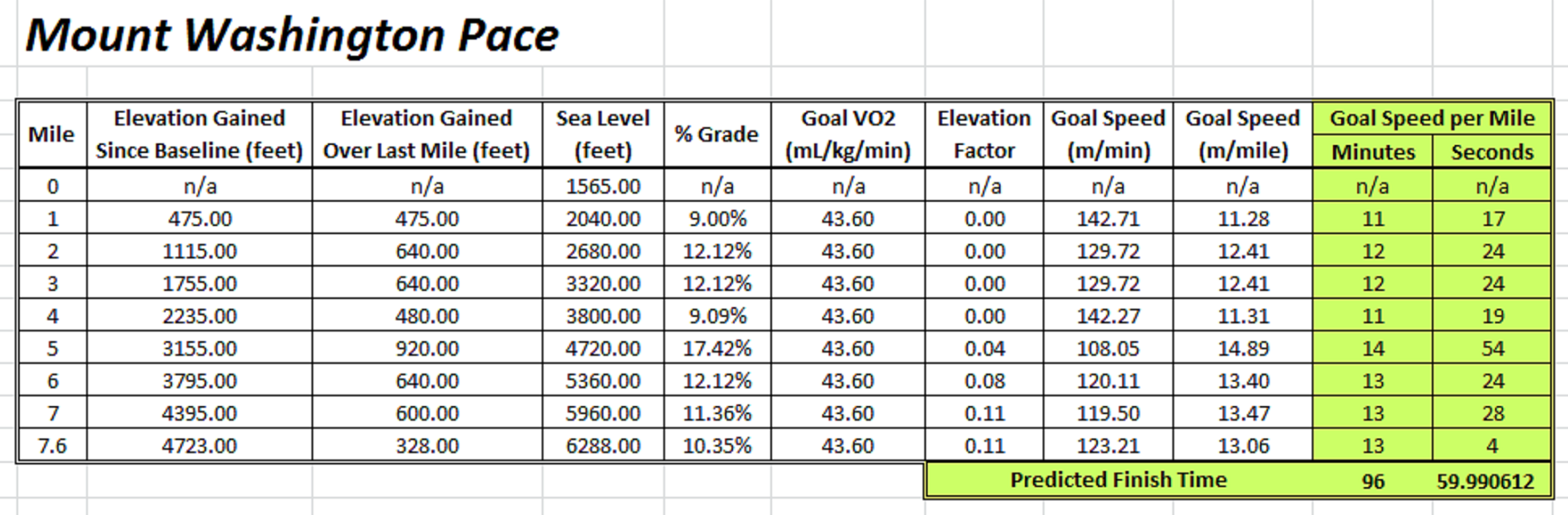
My new strategy was to keep my level of exertion consistent as the course conditions changed around me.  Using equations that take into account slope, speed, and altitude, I created a spreadsheet that determined the level of oxygen consumption (VO2) that I needed to maintain throughout the race in order to finish in my goal time.  The spreadsheet showed that I needed to maintain a VO2 of 43.6 mL/kg/minute for the entire event in order to finish in my goal time of 1:37.

MountWashingtonSpreadhseet

The next step was to convert 43.6 mL/kg/minute to METS, another measure of oxygen consumption.  The advantage of working with METS as opposed to VO2 is that METS appear on the digital displays of many treadmills, exercise bikes, and other cardiovascular equipment.  By using these pieces of training equipment at my desired METS level, I learned what it felt like in terms of perceived exertion to sustain that level of oxygen consumption.  I could then run outside at that same exertion level and be reasonably certain that I was running at the necessary VO2/METS level.

As my training continued across various modes, I built my endurance at this level of oxygen consumption until I could sustain it for close to the time I expected it would take me to finish the race.

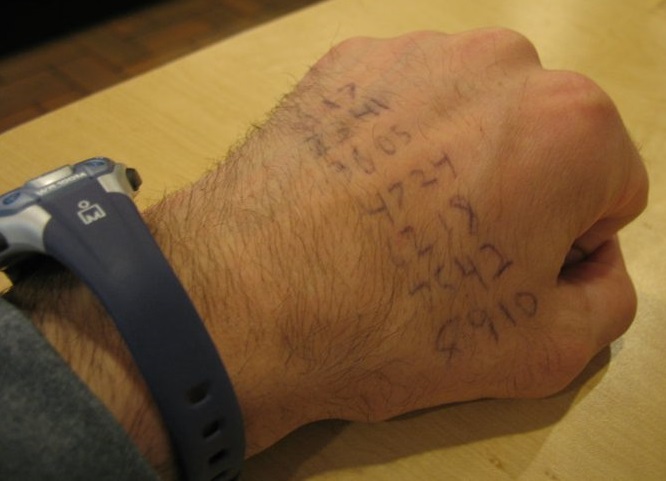
The spreadsheet was not only helpful during training, but also the race itself, as it showed me what my time for each mile should be in order to finish within my goal time.  I wrote these times on the back of my left hand so I could easily compare them to my watch at each mile marker during the event.
MountWashingtonHand

I finished the 2011 race faster than I had in either of my previous two Mount Washington races.  I was not necessarily any fitter than I was in 2009 or 2010, but I was definitely smarter, and that made all the difference.

No matter the event for which you are training, make sure you have a sound plan in place that will get you to your goal.

He Said, She Said: Organic vs. Conventional

Posted on by

We often field questions from patients regarding which is better, organic or conventional produce, especially this time of year when people are visiting farmers’ markets and pick-your-own farms, growing their own gardens, and generally enjoying the abundance of different fruits and vegetables that are in season.

He Said

Would you rather pay less for your produce now and risk discovering later that conventional food is actually harmful, or pay more now for organic and risk finding out later that conventional would have been totally safe all along?

In other words, whether you choose to buy conventional or organic, you are taking a gamble either way. The decision is personal and based on your own concerns and priorities.

The middle ground between the poles is also a perfectly valid option. For those looking to pick their spots, the Environmental Working Group is a helpful resource. They publish a guide to help shoppers determine which fruits and vegetables they consider most important to buy organic based on pesticide contamination.

When it comes to organic vs. conventional produce, there really is no one right answer for everybody. As long as you are eating fruits and vegetables, you are making the right choice.

She Said

While in general I try to buy mostly organic fruits and vegetables, I am not obsessive about it. Yes, there are good reasons to buy organic (no pesticides, chemicals, hormones or genetically modified organisms (GMOs)), but there are a lot of myths out there about why organic foods are superior to conventional foods.

Although many people believe that organic produce is more nutritious than conventional, numerous studies have shown that there often is no difference in nutrient content between the two. What really seems to matter is how long the produce sits on the shelf, as more nutrients are lost when produce sits out for longer periods of time.

While it is true that organic produce is grown without pesticides or chemicals, it is not necessarily better for the environment than conventional produce, as conventional farming is more productive and efficient than organic farming. According to the Hudson Institute’s Center for Global Food Issues, if we were to switch all conventional farming to organic, we would need to cut down 10 million square miles of forest.

Finally, just because organic produce is chemical free does not mean you don’t have to be careful about washing it. It is still susceptible to bacteria.

So, while I don’t think there is anything wrong with choosing organic more often (It’s good to reduce our exposure to chemicals and pesticides.), it is important to know that organic is not inherently better than conventional.

He Said, She Said: Health at Every Size®

Posted on by

Over the last several months, we have been learning more about the Health at Every Size® (HAES®) movement. The HAES® approach to health emphasizes eating intuitively and being physically active for pleasure rather than focusing on weight loss and dieting.

Clearly, the HAES® approach flies in the face of almost everything our society believes about health (i.e., that thin people are innately healthier than heavier people, and that losing weight is the be-all and end-all to being a healthier, happier person). Given the years and years of messages we have received about how dangerous it is to be overweight, the HAES® approach is a pretty revolutionary and scary premise.

He Said

The HAES® approach is most typically brought up in the context of overweight individuals, but health – or lack thereof – at leaner sizes also falls under the topic’s umbrella. In other words, just because someone is thin does not mean he or she is healthy.

Recently, a new patient was talking with me about the pressure she feels to be skinny in her community where so many of the women she sees around town are thin. While some of the women my patient envies no doubt are blessed with a foundation of helpful genetics on top of which they have built healthy lifestyles, some of them keep their figures through unhealthy means: excessive exercise, disordered eating, laxative abuse, anorexia, purging, etc.

The truth is that so many of us are dealing with health conditions invisible to others, such as diabetes, hypertension, depression, arthritis, Celiac disease, eating disorders, HIV, and high cholesterol, just to name a few, that we can judge neither one’s health nor lifestyle based on his or her size alone with any degree of accuracy.

She Said

I find a number of things about the HAES® approach interesting. The aspect I like the most is that it stresses that health is much more than just how much you weigh.

In a previous blog, I discussed the limitations of the BMI, as it does not give us enough information about an individual to determine his or her overall health. the HAES® approach says that health is about eating according to your body’s hunger, fullness, and appetite cues; exercising for pleasure (as opposed to doing so just to burn calories); and recognizing that health comes in all shapes and sizes.

These ideas are things that I try to stress in my sessions with clients – that if you are only focused on calories in vs. calories out, weight, and exercise solely for the purpose of weight loss, you are missing the bigger picture.

Gallo Pinto

Posted on by

Before the Boston marathon bombings caused me to shift gears, I had intended on writing last week’s blog entry about our recent trip to Costa Rica.  In the very early morning hours of Patriot’s Day, Joanne and I returned from a short vacation there.  As was the case on our honeymoon, we took particular interest in the food.

For better or worse, much of the food at the two resorts where we stayed was Americanized.  In other words, the menus contained several items that were not traditional in Costa Rica, but rather were attempts to provide American tourists with familiar foods: cheeseburgers, pasta, pizza, French fries, etc.

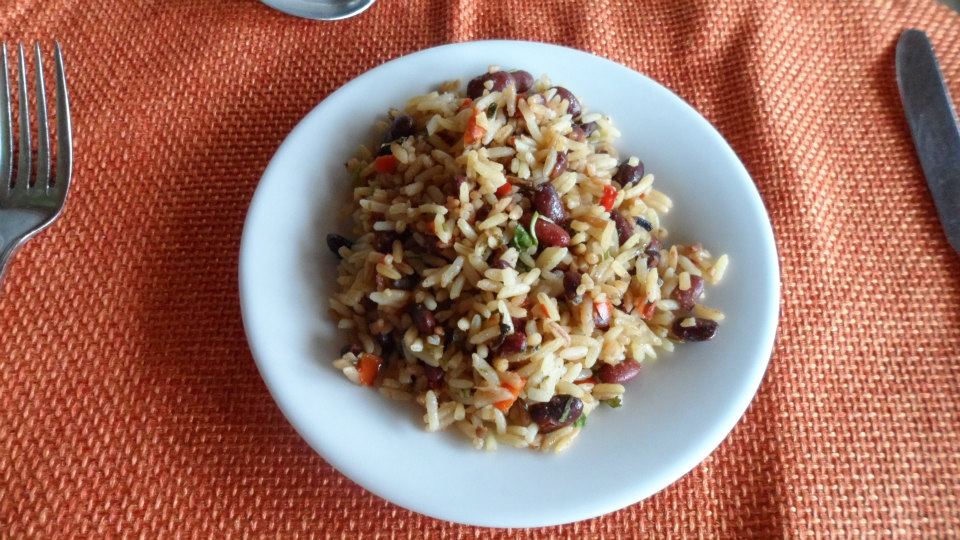
We did, however, learn that rice and beans are prevalent in Costa Rican cuisine and many Costa Ricans start their day with a dish of gallo pinto, a traditional dish made with these two staples.  I had gallo pinto for breakfast a handful of mornings and really enjoyed it.

GalloPinto

I find that when the topic of breakfast first comes up in my sessions, patients initially feel like they are limited to the usual options: cold cereals, hot cereals, bagels, eggs, bacon, waffles, muffins, pancakes, yogurt, etc.

What they come to realize though is that breakfast is just like any other meal of the day and we need not limit ourselves to the traditional breakfast options.  In other words, while breakfast options certainly include the typical options I listed above, they also include salads, sandwiches, entrees, or anything you might have at any other time of the day.  Gallo pinto is a perfect example.  Not too many Americans would typically consider rice and beans a breakfast option, yet they fill that role quite well for millions of Costa Ricans.

What might you consider having for breakfast if you expand your options beyond typical breakfast foods?

Where Dreams Literally Come True

Posted on by

The following blog entry appeared as a letter to the editor in the Wellesley Townsman on April 25, 2013.

I ran my last Boston marathon years before Joanne and I met.  Since then, she has occasionally asked me if I would ever consider running another one.   My response was always no, I could not envision a reason to do so.

The stretch of Boylston Street where Monday’s bombings occurred is special ground.  Every time I was on the verge of finishing the marathon, I took off my sunglasses as I made the left onto Boylston because I wanted the most raw, unfiltered absorption of the experience and atmosphere as I could have.  The straightaway is long, much longer than it appears on TV.  The finish line, in sight the entire time it takes to cover the distance, cues each runner to remember the reasons why he or she decided to race in the first place.  Throughout their unpleasant, cold, and mushy winter training, runners fantasize about running down Boylston with the crowd roaring, the finish line in sight.

That stretch of Boylston might be the only spot in the entire city where dreams literally come true for thousands of people every single year.

For many runners, finishing the marathon would be impossible without the support and encouragement of those along the route, including not just the volunteers, but also the spectators. They make the day what it is.  Without them, the marathon would not be an event, but rather just a bunch of people going out for a jog.  When I had to drop out of the 2004 race due to a medical problem, a complete stranger ran out her front door after seeing me collapse at the end of her driveway and cared for me until I was loaded into an ambulance.  More times than I can count, I saw struggling racers break out of their shuffling walks and back into jogs because somebody on the side of the road told them they could still do it.

A tragedy like Monday’s bombing would have been wrong no matter where it occurred.  If they blew up the local diner or bus stop instead of the Boston marathon finish line it would have still been wrong, but it would have been a different kind of wrong.  In a city where we tend to keep to our own circles, cut each other off and exchange middle fingers in traffic, and walk past each other without even batting an eye, the marathon is the antithesis: strangers act like best friends in order to build something overwhelmingly positive.  Somebody attacked that and tainted it.  They went after the city at its finest and hit us in the heart.

We need to get that back; we need to make that stretch of Boylston special again.

Many ways exist in which we can make that happen, none of which will be more significant than when thousands of spectators line Boylston Street again for next year’s race.  As for me, I am a runner, I have been my whole life.  It’s what I do.  Given that, I aim to establish a 2014 marathon charity team to fundraise for Monday’s victims, to enter the race as a member of that team, and to run down that Boyston straightaway slapping hands with every spectator I can reach.

George Etzweiler

Posted on by

I was going to continue “The Interior” series with two more entries in which I discuss foods like baking goods, nuts, and supplements.  However, people seem to already get the point that making sweeping generalizations about where to shop is not necessarily a great strategy, and I am wary of beating a dead horse.  If you are just dying to read what I wrote about almonds and cocoa though, send me an email.

I prefer to switch topics completely in order to share a photo I have been meaning to post for quite some time.

91YearOldThis is George Etzweiler, from State College, Pennsylvania, finishing the Mount Washington road race in 2011.  As he approached the finish line, virtually all of the spectators and runners who were still at the summit turned their attention to him and cheered.  Some of us (including me) took his picture.

At the time of this photo, Mr. Etzweiler was 91 years old.

He finished the race again in 2012, at the age of 92, with a faster time than he ran at age 89.

The Long Red Line

Posted on by

IMG_20130329_131830_891

A TV show that does spotlights on local businesses came down to our office the other day to film an episode about our practice.  After interviewing Joanne and me and filming a couple of mock sessions, the camerawoman took some video of the office itself.  When I noticed she was looking at the large map I have hanging on my wall, I explained to her that I rode my bicycle across the country for charity back in 2006 and the red line on the map snaking from Seattle to Boston is the route that we pedaled.

She was intrigued and asked me why I had not said anything about the bike ride when she was interviewing me.  As I was pausing to consider my answer, she offered, “I guess it doesn’t have much to do with nutrition, right?”  My immediate reaction was agreement; the trip had nothing to do with either our business or nutrition counseling.  Really, I had just put the map up for decoration and perhaps a conversation piece; therefore, I saw no reason to discuss it on a program about our practice.

As I told her more about the map and our ride though, I realized just how wrong my initial reaction was.

I kept that map in my backpack during the ride.  After each day’s trek, I took the map out and drew a short line with a red Sharpie indicating where we had biked that day.  I clearly remember being in Montana, looking at the vast distance from there back to Massachusetts, and having a hard time believing we would ever actually get to Boston.

Nobody bikes from Seattle to Boston overnight, and there are no shortcuts.  It takes waking up each morning and making a conscious decision to put in the work necessary to go to sleep somewhere a little farther east than the night before.  The daily progress sums over time, and with each day’s trip the ultimate destination grows closer.

What began as a short, red segment connecting Seattle to our first stop in Sedro-Woolley, Washington, grew into a gigantic, continent-spanning line because each day we resolved to progress a little bit closer to our goal.  Day after day, we shrunk the transcontinental distance that once seemed insurmountable until we were standing on a Massachusetts beach.

The more I think about it, the more it sounds exactly like the work we do here with our patients.